

Durakerb supports Redbridge Council’s pioneering low carbon highways project
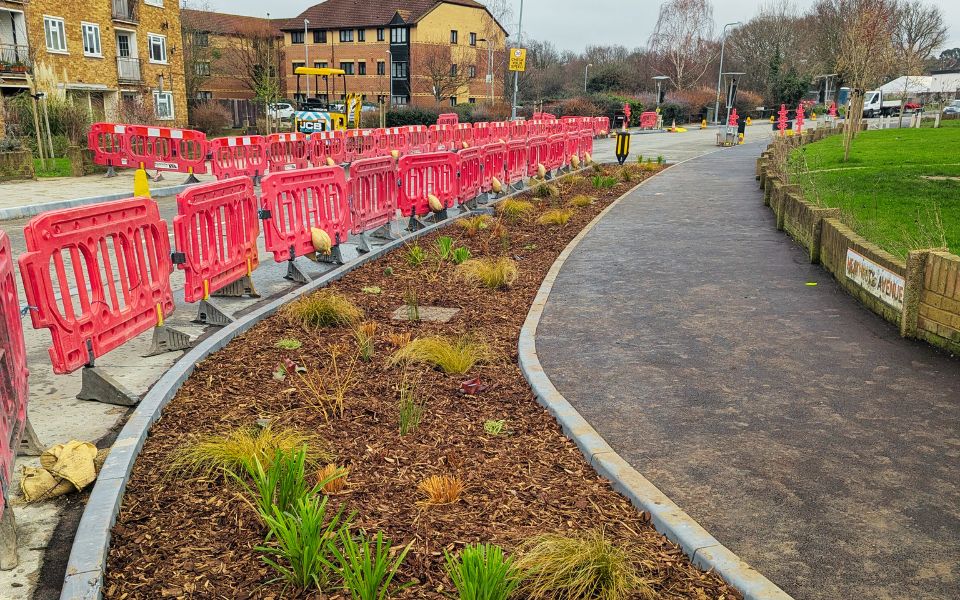
As part of its commitment to sustainability, Redbridge Council has become the first London borough to incorporate a range of low carbon materials and construction methods on a highways project.
Delivered on Heathcote Avenue in Clayhall, the scheme featured Durakerb recycled polymer kerbs as one of several innovative solutions selected to support Redbridge Council’s ambition to deliver more sustainable highways infrastructure. Working alongside Kenson Highways and its supply chain partners, the council has set a new benchmark for infrastructure delivery.

Supporting a low carbon approach
Reducing the carbon footprint of the project was a key objective from the start. Rather than relying on traditional construction materials, the council’s Highways Team selected products that would generate carbon savings while delivering the durability required for a busy urban area.
As part of this approach, Durakerb was installed to provide a low carbon alternative to conventional concrete kerbing. Manufactured using 88% recycled and recyclable polymer, Durakerb is produced using recycled milk bottles, caps and closures, alongside other household and commercial polymer waste.
By diverting waste from landfill and reducing reliance on traditional materials, Durakerb helped support the project’s wider objectives of delivering more sustainable highways infrastructure. As a BBA HAPAS-approved system, Durakerb also provides the performance and durability required for highways applications.
Setting a benchmark for future projects
Alongside its environmental credentials, Durakerb offered practical benefits during installation. Its lightweight design supports safer manual handling and faster installation compared with traditional concrete kerbing.
Durakerb formed part of a wider package of low carbon innovations that also included evoZero near-zero carbon cement, lower-carbon asphalt, organic topsoil, solar-powered temporary traffic signals and electric and HVO-powered construction vehicles.
The combination of lower-carbon materials and construction methods used throughout the scheme has delivered an estimated carbon saving of approximately 65 tonnes – equivalent to driving around the world ten times.
As local authorities continue to look for practical ways to decarbonise highways projects, the Heathcote Avenue scheme demonstrates how innovative materials such as Durakerb can play an important role in achieving measurable environmental benefits alongside proven engineering performance.
Download PDF Version